
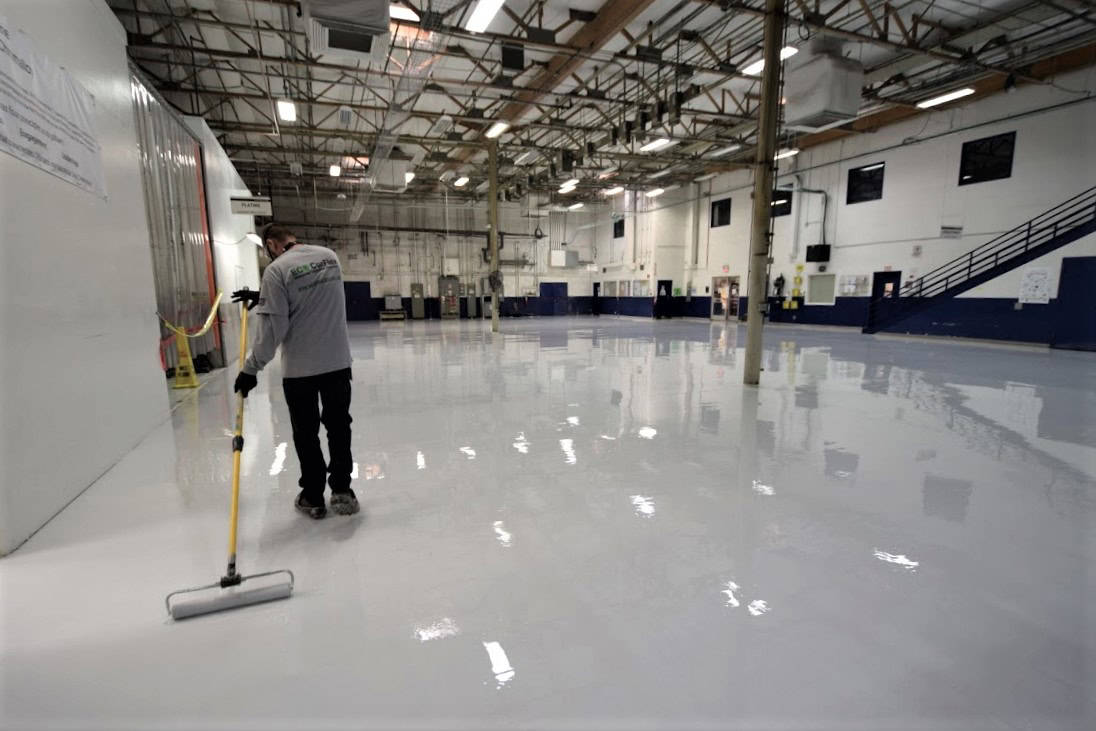
Where reflector floors work in a Rochester home
A reflector floor earns its money in rooms people look at. The finish is a poured, light reactive coating that reads almost like polished stone, and it does its best work under good lighting in a space that stays clean and dry. In Rochester homes that usually means a finished basement, a home gym, a bar area, or a showroom style garage that functions more as a display space than a working one.
The pattern is worth being honest about. Every reflector pour is unique, because the pigment moves as it cures and no two floors settle the same way. That is the appeal. It is also the reason the finish behaves differently from the flake systems most Rochester garages get, and the differences matter more than the photographs suggest.
Where a full chip floor beats reflector in Rochester
For a working garage in this climate, a full chip system usually outperforms reflector, and we would rather say that before a quote than after an install.
Three reasons, all of them local:
- Salt. From November to April a Rochester garage floor spends months under brine dripping off vehicles. A high gloss reflective surface shows every salt ring and water spot. The broken pattern of a chip floor hides the same residue between cleanings.
- Slip resistance. A reflector floor is smooth by design. Chip systems build texture into the surface, which matters on a floor that gets wet every time a car pulls in off a slush covered street.
- Repairability. A chip floor can be patched and blended. A reflector floor largely cannot, for reasons covered below.
Reflector is the better answer when the floor is a feature. Chip is the better answer when the floor is a working surface. Most Rochester garage floors are the second thing.
What goes wrong with reflector floors
Three failure modes account for most of the disappointment we see, and none of them is about the coating being low quality.
The slab telegraphs through. A reflective surface acts like a mirror laid over the concrete, so every low spot, trowel mark and old repair reads through the finish under raking light. Flake hides those. Reflector advertises them. On a slab with pitting or spalling, the grinding and patching has to be done to a higher standard before a reflector pour than before a chip floor, and that shows up in the quote.
Damage cannot be spot repaired invisibly. Because the swirl pattern is unique to the pour, a chip or gouge cannot be filled and blended the way a flake floor can. A convincing repair usually means recoating a whole section, and the new section will not match the old one exactly.
It shows maintenance. Reflector floors are not harder to clean, but they are less forgiving about being left dirty. Dust and salt film that would disappear into a chip pattern sits visibly on a mirror finish. If nobody is going to sweep it, the floor will not look like the photographs. Our maintenance guide covers what upkeep actually involves through a Rochester winter.
Reflector and metallic are not the same thing
The two terms get used interchangeably online and they are different products. A reflector finish is a light reactive coating built for depth and gloss. A metallic pour uses suspended metallic pigment to create a marbled, moving pattern with far more visual drama.
In Rochester we install metallic on the commercial and light industrial side, where showrooms, retail spaces and lobbies justify the finish and the maintenance that comes with it. For residential work our recommendation is a reflector finish or a full chip system, depending on the room.
Whichever finish goes down, the durability comes from the topcoat rather than the look. A polyaspartic topcoat is what carries the floor through freeze and thaw cycling, UV exposure near a garage door, and hot tire contact.
Frequently asked questions
What is an epoxy reflector floor?
A reflector floor is a poured coating system finished with a light reactive layer that creates depth and a high gloss, mirror like surface. Unlike a chip floor, which broadcasts vinyl flake across the surface for texture and pattern, a reflector floor is smooth and its pattern comes from the way the pigment moves as it cures. Every pour is unique, which is the main reason people choose it.
Is a reflector floor a good choice for a Rochester garage?
Usually not, if the garage is a working one. Rochester garages spend five months a year under road salt and meltwater, and a high gloss surface shows every salt ring and water spot while offering less slip resistance than a textured chip floor. Reflector is the better choice for a finished basement, a home gym, a bar area, or a display garage that stays clean and dry.
How is a reflector floor different from a metallic epoxy floor?
A reflector finish is built for depth and gloss. A metallic pour suspends metallic pigment to create a marbled, moving pattern with much more visual drama. They are often confused because both are smooth, poured finishes rather than flake systems. In Rochester we install metallic on commercial and light industrial projects such as showrooms and lobbies, and recommend reflector or full chip systems for residential work.
Do reflector floors show dirt and salt more than flake floors?
Yes. They are not harder to clean, but they are less forgiving about being left dirty. Dust and winter salt film that would disappear into the broken pattern of a chip floor sits visibly on a mirror finish. If the floor will not get swept regularly, a chip system will look better between cleanings and will keep looking that way for longer.
Can a reflector floor be repaired if it chips?
Not invisibly. Because the pattern is unique to the original pour, a gouge or chip cannot be filled and blended the way damage on a flake floor can. A convincing repair normally means recoating a full section, and the new section will not match the surrounding floor exactly. This is the single biggest practical drawback of the finish and it is worth weighing before choosing it.
How much does a reflector floor cost in Rochester NY?
Reflector falls inside the same per square foot range as our other indoor systems, so the finish itself is not usually what moves a quote. Slab condition is. Because a reflective surface telegraphs low spots and old repairs, the grinding and patching has to be done to a higher standard than for a chip floor. Our pricing page lists current per square foot ranges and typical project totals.